
Gallons, quarts, cups and spoons use US customary sizes.
A Unit Converter saves you from guessing when a recipe lists grams but your scale only shows ounces, or when a road sign uses kilometers and you think in miles. If you have ever stared at a measurement you could not picture, you already know the frustration. This page shows you how these tools work and how to use them for everyday length, weight and temperature questions in the United States.
How a Unit Converter Works
A unit converter takes a value in one unit and returns the equivalent in another. It does this by multiplying your number by a fixed conversion factor. For example, one inch equals exactly 2.54 centimeters, so the tool multiplies by 2.54 to switch between them. The math is simple, but it saves you from looking up factors and doing the arithmetic yourself. Most tools let you pick the starting unit, the target unit and type in a number, and the result appears right away.
Common Conversions at a Glance
Most people reach for a unit converter to handle a handful of everyday conversions. Length, weight and temperature cover the bulk of searches, from measuring furniture in inches to checking a recipe in grams.
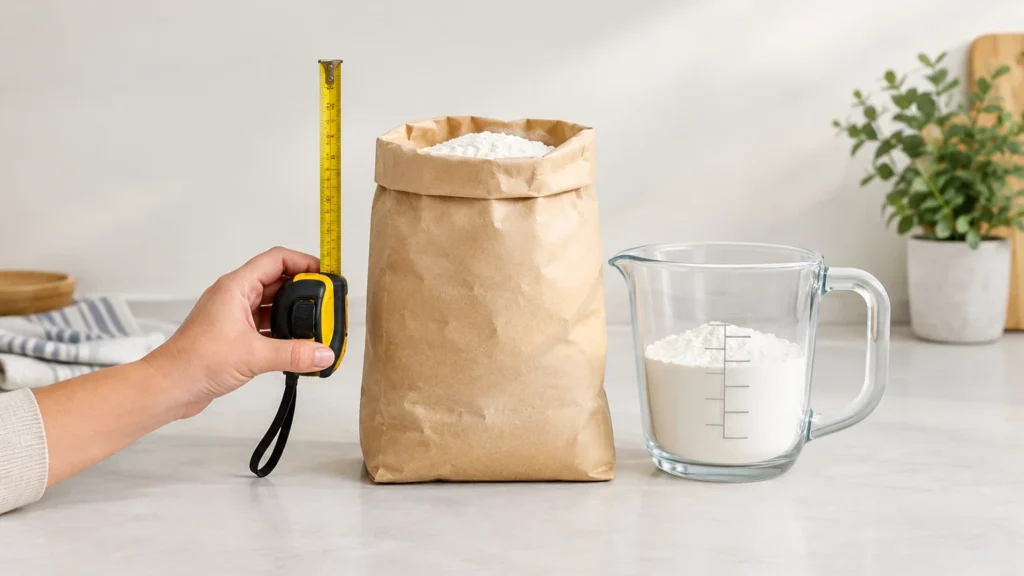
Here are the pairs that come up most often. Each one is a fixed ratio, so once you know it, you can convert quickly in your head or with a calculator.
| From | To | Rule of thumb |
|---|---|---|
| Inches | Centimeters | Multiply by 2.54 |
| Pounds | Kilograms | Multiply by 0.4536 |
| Fahrenheit | Celsius | Subtract 32, then multiply by 5/9 |
| Gallons | Liters | Multiply by 3.785 |
Using a Unit Converter for Cooking and Travel
A unit converter earns its keep in the kitchen and on the road. Recipes written in cups and ounces may need grams or milliliters, and a road trip abroad can turn miles into kilometers fast. Here are a few everyday cases where a quick conversion saves time and guesswork:
- Turning a recipe’s ounces of flour into grams for a more precise bake
- Converting a 350 degree Fahrenheit oven setting to Celsius when using a European appliance
- Changing a speed limit or road distance from kilometers to miles while driving
- Checking how many liters a gallon of gas or a bottle of water holds on a trip
Exact values can vary slightly by ingredient and region, so confirm critical measurements against an official reference.
Tips for Accurate Conversions
A quick conversion is only useful if the answer is right. Most errors come from rounding too early, mixing up units, or keeping more decimal places than the job needs.
Round only at the end of a calculation. Rounding each step can shift the final number, especially in multi-step recipes or measurements.
- Check that both units measure the same thing, such as fluid ounces against weight ounces.
- Match the precision to the task: one decimal place is plenty for a recipe, while building plans may need more.
- Confirm the exact conversion factor with an official source such as NIST before using it for anything critical.
Key Takeaways
- A unit converter swaps one measurement for another, such as inches to centimeters or Fahrenheit to Celsius, in a few seconds.
- Length, weight, volume and temperature cover most everyday conversions, whether you are cooking, traveling or checking a product label.
- Always confirm the unit names and the rounding setting, because small differences in decimals can change a recipe or a fit.
- For official or safety-critical work, check values against a trusted reference such as NIST before you rely on them.
Frequently Asked Questions About Unit Converter
How do I convert Celsius to Fahrenheit?
Multiply the Celsius temperature by 9, divide the result by 5, then add 32. For example, 20 degrees Celsius becomes 68 degrees Fahrenheit. A temperature converter does this math for you, so you can enter the number and read the answer instantly.
Is a unit converter accurate for science and engineering?
Most online tools use exact conversion factors, so they work well for quick checks. For lab reports, engineering specifications or regulated work, confirm the factors and rounding rules against an authoritative source such as NIST, and keep enough decimal places for your project.
What is the difference between US customary and metric units?
US customary units, such as inches, feet, pounds, gallons and Fahrenheit, are used in everyday life across the United States. Metric units, such as centimeters, kilograms, liters and Celsius, are based on powers of ten and are standard in science and most of the world. A metric to imperial converter bridges the two.
What tool should I use to convert cups to grams for baking?
A volume-to-weight conversion depends on the ingredient’s density, so a generic cups-to-grams figure can be off. Many US recipes use cups, while many international recipes use grams. For precise baking, check the ingredient’s specific weight in a reliable food reference or use a kitchen scale.
How do I convert miles to kilometers quickly?
One mile equals about 1.609 kilometers, so multiply miles by 1.609 to get kilometers. For example, 10 miles is roughly 16.1 kilometers. Exact values are defined by standard conversion factors, but always confirm figures with an official source such as NIST if you need them for legal or technical use.
References & Further Reading
- NIST – National Institute of Standards and Technology
- BIPM – International Bureau of Weights and Measures
About This Article
This guide was written with AI assistance from publicly available information. Prices, nutrition values and availability can change, so confirm important details with the official source before you decide.
Pingback: Number Base Converter: Free Online Tool
Pingback: Percentage Calculator: Easy Guide for Any Percent
Pingback: Best Statistics Calculator Tools Compared